The Athens rental market in 2026: rents, yields and the rules for letting
· 6 min read
Rents in Athens are still rising, short-term letting is frozen in the centre and the tax rules changed in 2026. What owners and investors need to know.
Athens remains one of the tightest rental markets in Europe. Asking rents are still climbing, though more slowly than in the post-pandemic years, while the government has spent 2025 and 2026 steering homes away from short-term letting and back towards long-term tenants. For a foreign owner, that means the question is no longer simply what a flat could earn, but which kind of letting is allowed, how the income is taxed and what managing a tenancy from abroad involves. This article sets out the position as of October 2026, using the latest market data and the rules currently in force.
Long-term rents: still rising, but at a calmer pace
According to Spitogatos, the largest Greek property portal, average asking rents in Attica rose by 4.5% year on year in the second quarter of 2026, slightly faster than the 4.4% recorded a year earlier. Nationally the picture is cooler: asking rents rose by just 1.3%, compared with 7.2% the year before. The most expensive part of Attica remains the southern coast, with Vouliagmeni at about EUR 22 per square metre, while Kolonaki and Lykavittos lead the city centre at around EUR 17.9. Asking rents are what landlords advertise, so they tend to sit above the rents actually agreed.
Figures based on completed lettings tell a similar story. RE/MAX Greece, which tracks rental transactions in 124 areas, puts the average rent in the Municipality of Athens and neighbouring districts at EUR 9.8 per square metre in 2026, up from EUR 9.3 in 2025, an increase of 5.4%. Kolonaki is the most expensive central neighbourhood at around EUR 14, and some formerly cheaper districts are catching up quickly: Petralona rose by 15.6% and Kypseli by 14.3%. The pattern is clear. Demand is spreading outward from the historic core into well-connected residential neighbourhoods.

Gross yields by area
Global Property Guide, which compares median asking rents with median asking prices, put the average gross yield for Athens apartments at 5.52% in its May 2026 update, against a national average of 4.38% in the second quarter. The spread inside the city is wide. Older, cheaper districts such as Patision and Acharnon show around 6.95% on a one-bedroom flat, while two-bedroom apartments in Kolonaki and Lykavittos return about 3.39%. As a rule, the more expensive the purchase, the lower the yield, because rents do not rise as fast as prices in prime streets.
Pangrati, a residential district east of the National Garden, sits in the middle of that range. The same dataset shows a one-bedroom flat priced at about EUR 180,000 renting for around EUR 700 a month, a gross yield of 4.67%, with two- and three-bedroom flats at 3.92% and 3.79%. These are gross figures, before tax, maintenance, insurance, management and empty periods. Global Property Guide notes that net yields are usually 1.5 to 2 percentage points lower, which is a sensible starting assumption for any investment calculation.
Short-term rentals: the freeze in central Athens
Since 1 January 2025, new properties cannot be added to the short-term rental registry in the 1st, 2nd and 3rd municipal districts of Athens. The area covers Plaka, Kolonaki, Koukaki, Syntagma, Monastiraki, Exarchia, Neos Kosmos, Metz, Petralona, Gazi and Pangrati, among others. A joint ministerial decision extended the freeze to 31 December 2026. In September 2026, at the Thessaloniki International Fair, the government announced a further extension to 31 December 2027; as of October 2026 that extension had been announced but not yet passed into law. Listings registered before the freeze may continue, and a change of owner requires a new registration number, which cannot be issued while the freeze applies.
Every short-term let in Greece must carry a property registry number (AMA) issued by the tax authority, AADE. Since 1 October 2025, under Law 5170/2025, registered homes must also meet minimum standards: civil liability insurance, a 6 kg fire extinguisher per 100 square metres, smoke detectors in bedrooms and the kitchen, emergency lighting, a first-aid kit, an electrician's declaration and pest control. Only habitable rooms with adequate light and ventilation may be let, and air conditioning is required. Fines start at EUR 5,000 and rise to EUR 20,000 for repeat breaches, while letting without an AMA in the frozen districts carries penalties of at least EUR 20,000.
Tax on rental income and incentives for long-term letting
From 1 January 2026, Law 5246/2025 introduced a new scale for rental income received by individuals: 15% up to EUR 12,000 a year, 25% from EUR 12,000 to EUR 24,000, 35% from EUR 24,000 to EUR 36,000 and 45% above that. The new 25% band softens the previous jump straight from 15% to 35%. Short-term rental income from up to two properties is taxed on the same scale, whereas letting three or more properties short term is treated as a business activity. Short-term guests also pay a climate resilience fee of EUR 8 per night from April to October and EUR 2 from November to March, with higher rates for detached houses over 80 square metres.
To bring homes back to the long-term market, Greece offers a 36-month exemption from income tax on rent for individuals who let a property that had been declared vacant for at least three years, or had been used for short-term letting, on a lease of at least three years. It applies to leases signed between 8 September 2024 and 31 December 2026, and is lost if the home becomes vacant or returns to short-term use within that period. The government announced in September 2026 that the scheme will be extended; reports point to leases signed until the end of 2027, pending legislation.
Letting from abroad: contracts, deposits and management
A residential lease in Greece has a statutory minimum term of three years, and a tenant who meets their obligations can usually stay for that period even if the contract states less. Both sides need a Greek tax number (AFM), and the lease is declared electronically with AADE, where the tenant confirms it online. Deposits are typically one or two months' rent, held by the landlord, as there is no state deposit protection scheme. Since 1 January 2026, under Law 5222/2025, rent must be paid by bank transfer into an account registered with AADE and held in the landlord's own name, not a manager's or relative's.
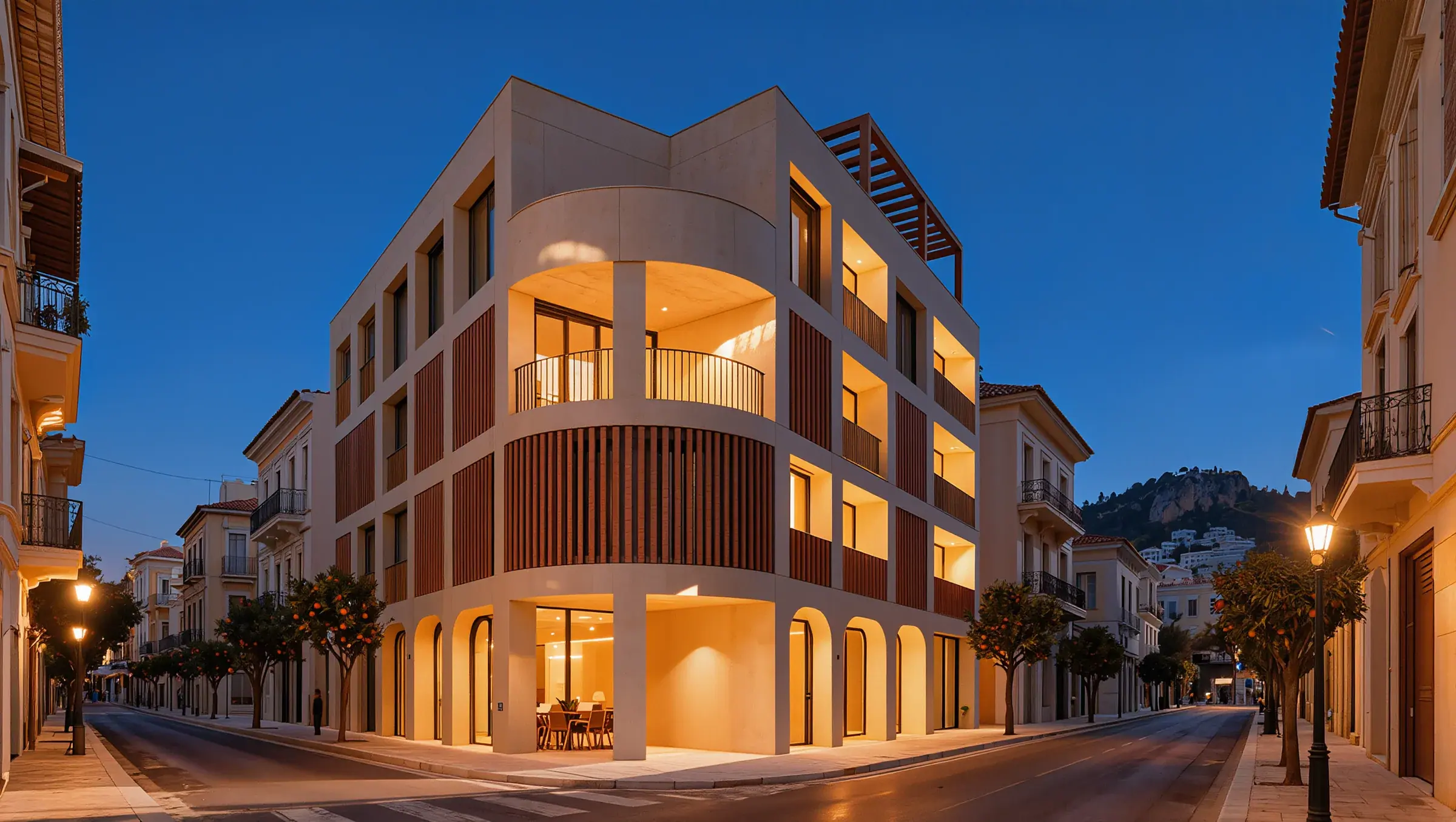
For owners living outside Greece, a local property manager usually handles tenant searches, viewings, inventories, maintenance and the annual tax declarations with an accountant, while the rent flows directly to the owner's own account. The practical consequence of the 2025 and 2026 rules is that, in central districts such as Pangrati, long-term letting is the realistic plan for most buyers today. That is the basis on which buyers at AKI GROUP's Ardittos Residences, due for delivery in Q4 2027, should model returns, with any change to the short-term freeze treated as an upside rather than an assumption.
This article is general information, not legal or tax advice.