Investing in Patras and Rio: Greece's western gateway in 2026
· 6 min read
A university city, a ferry port to Italy and a motorway now open end to end. How Patras and Rio compare with Athens on prices, rents and access in 2026.
Patras is Greece's third-largest city and the country's main western gateway, facing Italy across the Ionian and the mainland across the Gulf of Corinth. For a buyer who finds Athens increasingly expensive, it offers a working regional economy built on a large university, a busy international port and much improved road links. Rio, the seaside suburb at the foot of the Rio–Antirrio bridge, is where several of those threads meet. This guide sets out the facts as of October 2026: who lives and studies here, how the transport picture has changed, what property costs compared with Athens, and how the Golden Visa rules apply outside Attica.
A regional capital with a large student population
The Municipality of Patras had 215,922 residents at the 2021 census carried out by ELSTAT, the Hellenic Statistical Authority, which makes it the largest city in Greece after Athens and Thessaloniki. It is the capital of the Western Greece region and the commercial centre for Achaia and the surrounding areas. That scale matters for an investor: it means a year-round local economy, hospitals, schools and services, rather than a market that depends only on summer visitors or on buyers from abroad.
The University of Patras is the city's largest single source of rental demand. In data it submitted to ShanghaiRanking in 2026, the university reported 29,364 full-time degree students for 2025, with its main campus located at Rio. The University General Hospital also sits beside the campus, and the suburban railway serves both. There is a caution worth noting: in 2025 the rector warned that around 400 admitted students did not enrol, citing housing costs and competition from private colleges, and Greece's demographic outlook points to smaller student intakes over the next fifteen years.
Port, motorway and bridge
Patras has long been the main Greek port for ferries to Italy. As of 2026, Anek Superfast lists year-round sailings from Patras to Ancona and Bari, usually daily, and one or two sailings a week to Venice, with crossings of roughly 16 hours to Bari and around 20 to 25 hours to Ancona. Ferries to Italy use the newer south port, away from the historic centre. For European owners who prefer to drive with their own car, this is a practical route that few other Greek cities can match.
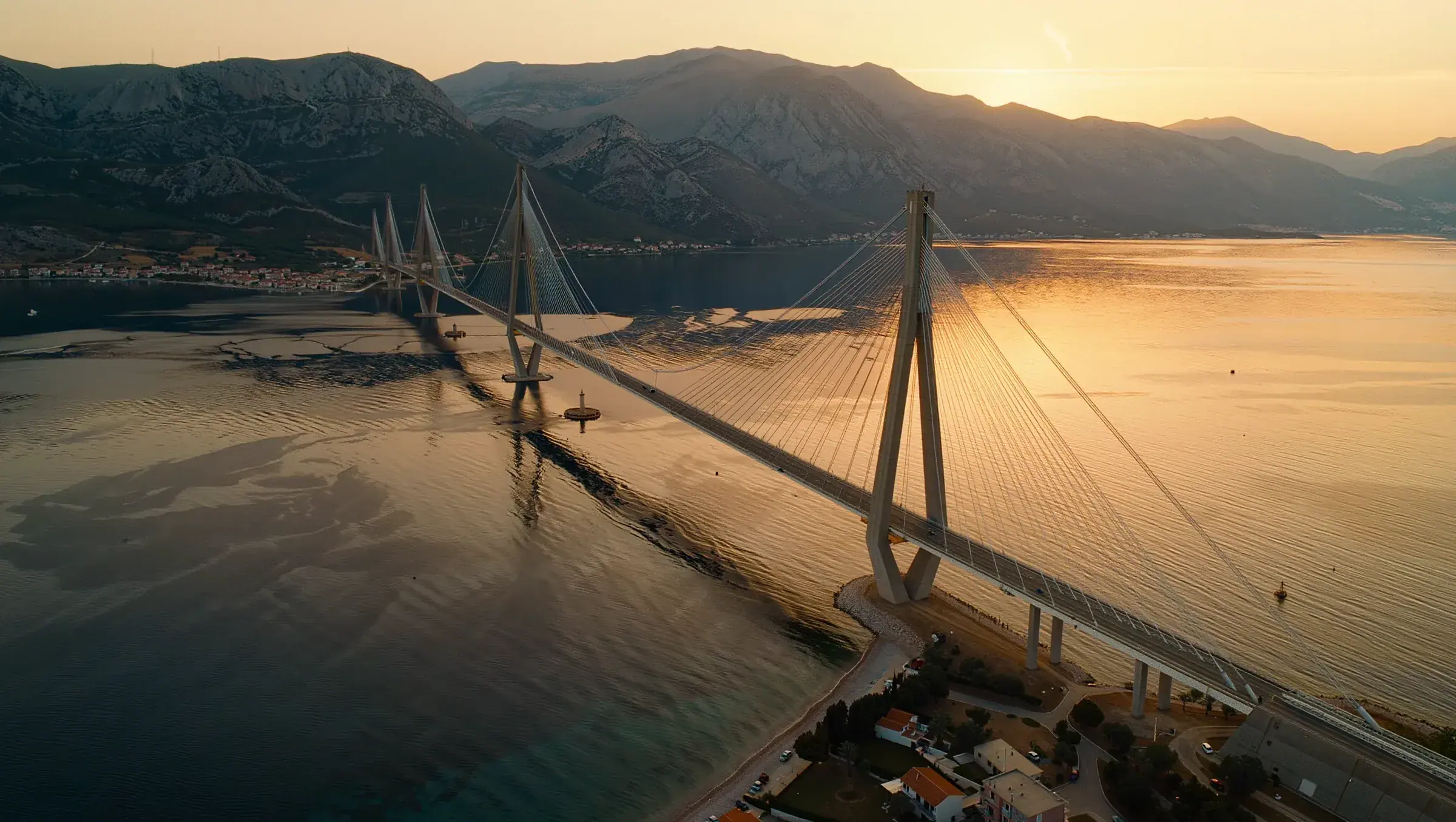
On land, the Olympia Odos motorway links Patras with Elefsina and Athens through Corinth; the Corinth to Patras upgrade was completed in 2017. The Patras to Pyrgos extension was handed over in full on 4 December 2025, after a first 65 km section opened in August 2025, and the full Olympia Odos network now runs to 277 km. The concession reports that Patras to Pyrgos now takes about 40 minutes. To the north, the 2,880-metre Rio–Antirrio bridge, opened in 2004, carries traffic from Rio across the gulf towards Nafpaktos, Epirus and the Ionian coast.
Rail: a long project nearing the city
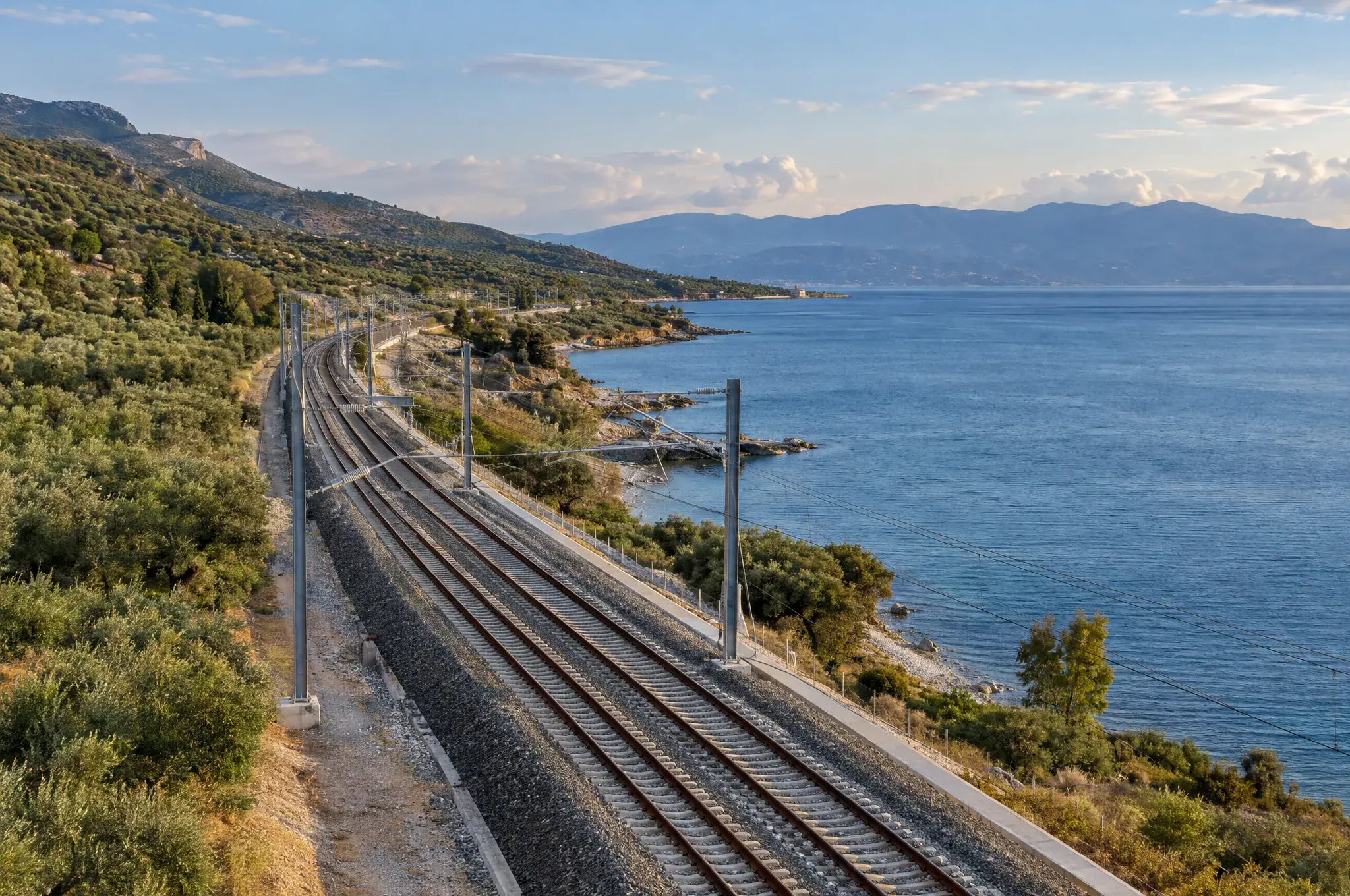
Patras has had no direct train to Athens for about 15 years, and as of October 2026 that is still the case. Passengers take the suburban railway from Athens to Kiato and a Hellenic Train service on to Aigio, with Hellenic Train connecting buses running between Kiato and Patras. The new double-track line from Rododafni to Rio, 28.8 km with electrification and ETCS signalling, was contracted in November 2022 to a TERNA and Mytilineos consortium. In January 2026 the government set the end of 2026 as the target for the new line to open as far as Psathopyrgos, on the edge of Patras, and 2028 for Rio.
The final link from Rio through Patras to the port is less settled. The current design places the line underground for about 6.5 km, from Kanellopoulou Street to Agios Andreas, but the extent of the tunnel has been debated locally and was still the subject of questions in Parliament in June 2026. Within the city, the Patras suburban railway (Proastiakos) operates two routes, Agios Andreas to Rio and Agios Andreas to Kaminia, which Hellenic Train announced would resume on 2 October 2026 after a period of works. Rail dates in Greece have slipped before, so buyers should treat them as targets, not commitments.
Prices and rents compared with Athens
Asking prices on the xe.gr property portal for the third quarter of 2026 show how wide the gap remains. In Patras, apartments of 81 to 120 m² were listed at an average of EUR 1,730 per m², against EUR 2,874 in the Municipality of Athens, about 40% less. For smaller homes up to 80 m², the figures were EUR 2,082 in Patras and EUR 3,087 in Athens. Patras prices still rose by 5% to 7.6% year on year across size bands, while the number of homes listed for sale in Patras increased by around a third, so buyers now have more choice.
Rents are lower too, though the gap is narrower for small units. The same xe.gr data put asking rents for homes up to 80 m² at EUR 10.03 per m² a month in Patras, against EUR 13.13 in Athens; for 81 to 120 m² the figures were EUR 6.39 and EUR 11.00. On those asking figures, a small Patras flat shows a gross yield of roughly 5.8%, slightly above Athens, but Patras rents rose only 1.4% over the year against 7.3% in Athens. Student demand supports small, central units: in 2025 To Vima reported 50 m² flats in central Patras letting for EUR 400 to 450, and renovated ones for EUR 550 to 650.
Rio's seafront and the Golden Visa outside Attica
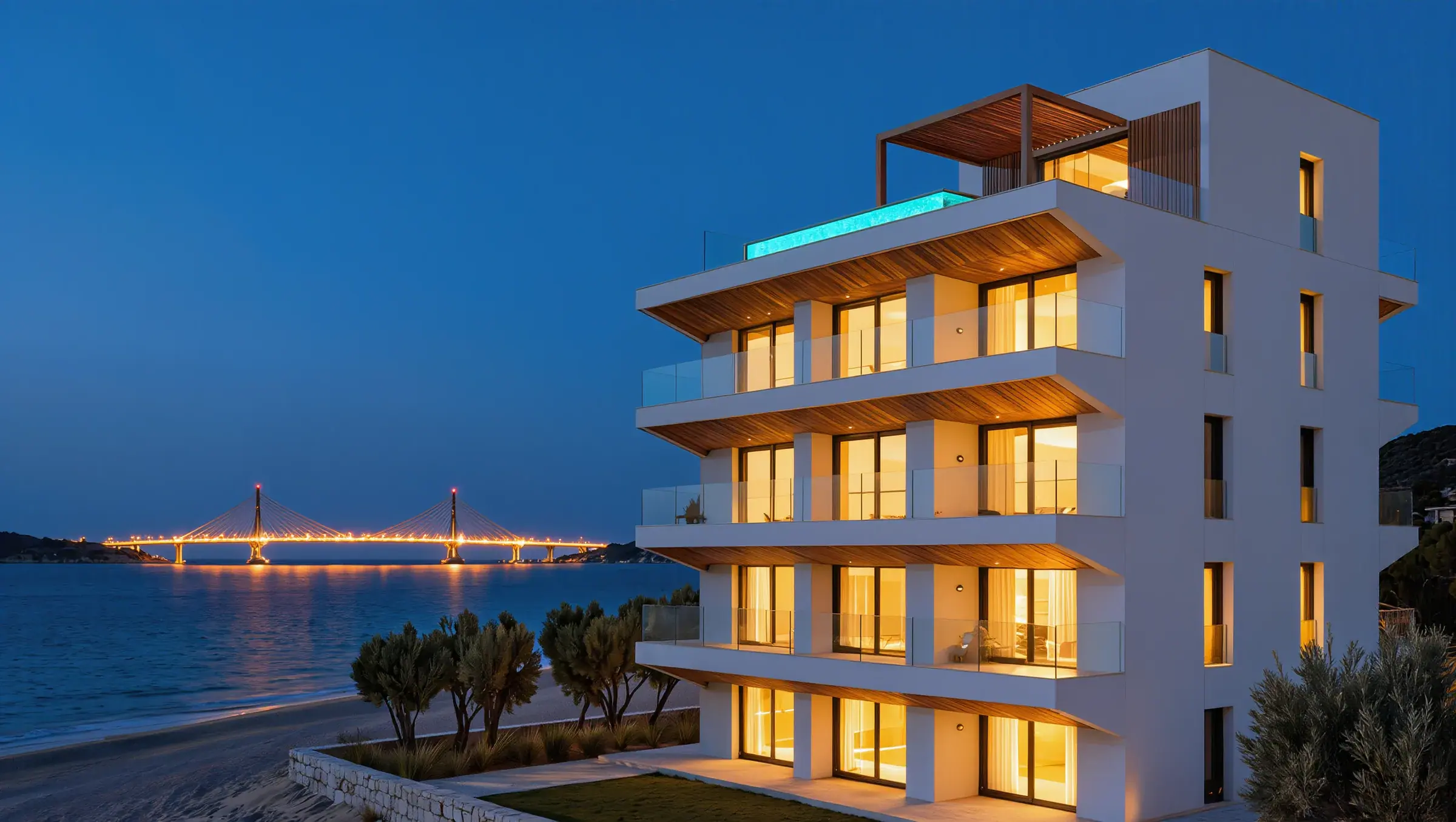
Rio combines several sources of demand in one place: the university campus and teaching hospital, the bridge, a long beach facing the gulf, and quick road access to central Patras and the motorway. That mix supports long lets to academics, medical staff and families, as well as summer use by owners themselves. New seafront stock is limited, which is why projects such as AKI GROUP's Galini Seafront at Rio draw interest from foreign buyers. Short-term letting is possible for ordinary owners subject to registration and local rules, but it is not allowed on homes bought for a Golden Visa.
Achaia is outside the high-demand zones, so the Golden Visa threshold in Patras and Rio is EUR 400,000, against EUR 800,000 in Attica, Thessaloniki, Mykonos, Santorini and islands with more than 3,100 residents. As of October 2026 the investment must be in a single property with main areas of at least 120 m², excluding storage and parking; several smaller units can no longer be combined. Short-term letting of the property is banned, with a EUR 50,000 fine and possible loss of the permit. A lower EUR 250,000 route applies only to commercial-to-residential conversions and listed-building restorations. A portfolio route proposed in July 2026 still needs legislation.
This article is general information as of October 2026, not investment, tax or legal advice.